Choosing the Perfect Sound System for Your Event: A Complete Guide
2 Oct 2025 · 4 min read
Planning a corporate event? We plan and deliver corporate events end to end.
Sound is the pulse of every successful event- a corporate conference, a product launch, or a private gala. The sound system should be well selected; otherwise, the speeches might be muffled, the audience distracted, and some compound might be missed. Conversely, the correct audio system feels like a boost to your whole experience, with your listeners listening and your message to them being clear.
This guide will step you through all the information you will require to select the most appropriate sound system that will suit your next occasion, including a comprehension of the acoustics in your venue, speaker type, speaker location, microphones, and testing in place.
1. Understand Your Event Type and Audience Size
Whatever the nature of your event will be:
- Conference or Seminar: Make the speech loud and uniform.
- Live Performance or Product Launch: Emphasize range, bass, and impact.
- Corporate Party or Gala: Consists of a balance with announcements.
Also factor in audience size:
- Small ( less than 100): A Simple PA system may be adequate.
- Multi-speaker installations (100-500) include subwoofers and mixers.
- Big (500+): Line array systems, enhanced mixing desks, and delay speakers.
2. Assess the Venue Acoustics
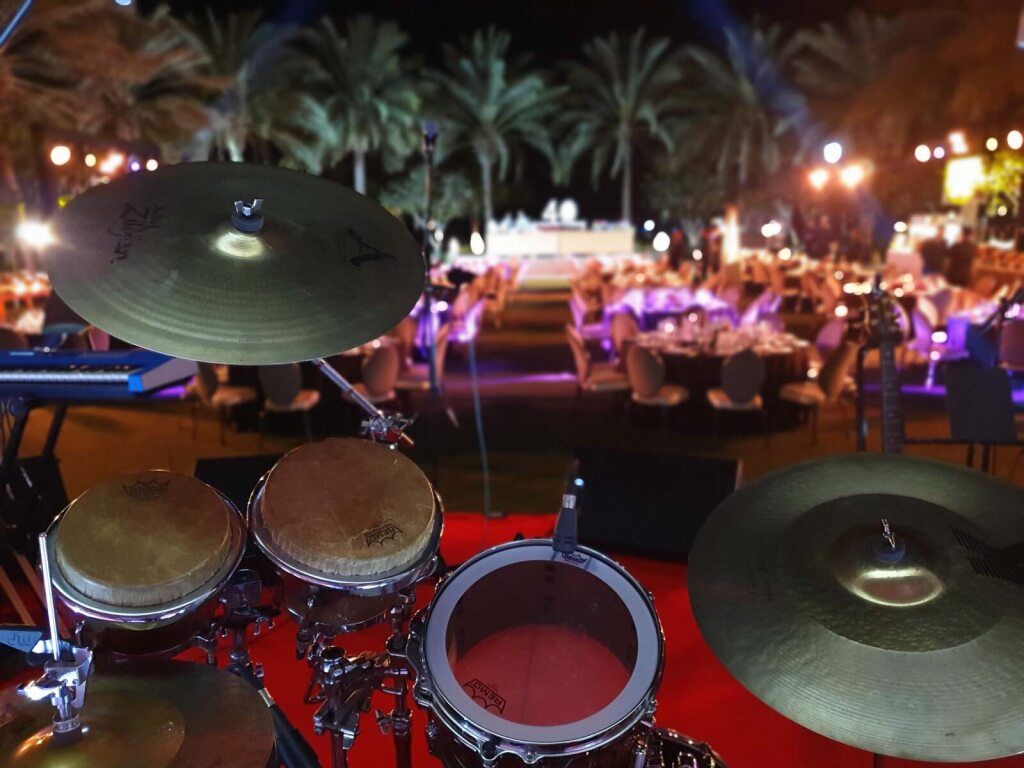
No two venues are the same. Sound is different according to size, material, and design.
- Indoor Venues: Surfaces are complex, which leads to the reflection; acoustic panels or foam should be considered.
- Outdoors: The sound becomes dispersed, and directional speakers and increased wattage should be used.
- The ceiling, walls, and flooring height influence the clarity and echo.
Pro tip: The best way to test natural reverberation and other echo points is by walking through the venue before the event.
3. Speaker Selection: Power, Type & Coverage
The most essential part of good sound is getting the right speakers:
- Main (FOH) Speakers: To cover the audience.
- Subwoofers: Add weight and bass - critical to music.
- Monitors: Monitors are used by speakers or performers on the stage.
- Line Array vs Point Source: Line arrays are superior in large, tall spaces.
Power Output: 5-10 watts per person is a good general rule of thumb when making speeches, and live music may use up to 20 watts.
Coverage Tip: 110deg-120deg horizontal dispersion is required to prevent a dead zone.
4. Microphones & Inputs: Choose Wisely
Mics are appropriate for different formats:
- Wired Handheld Mics: Trustworthy and low-latency.
- Wireless Handheld or Lavalier Mics: Ideal when presentations are needed and when moving around.
- Podium/ Gooseneck Mics: Ideal for panel discussions or lectures.
- Instrument Inputs / DI Boxes: Systems used with live bands or digital.
Always keep backups - particularly wireless.
5. Mixing, EQ & Signal Control
Your mixing board is the audio mixer:
- Turn volume, tone, and source on and off.
- EQ to cut feedback or enhance soundness.
- Control audio peaks with compressors and limiters.
In larger events, it is necessary to have a dedicated FOH (Front of House) sound engineer to control levels in real-time.
6. Cables, Setup & Connectivity
- Make XLR and SpeakON cables of professional quality.
- Do not run audio cables close to power lines--this will cause interference.
- Label all the inputs, mic type, and speakers' locations.
- Plan cable routing to prevent trip hazards and keep the setup clean.
7. Speaker Placement Strategy
Even sound distribution: The correct placement will guarantee this:
- Keep the position of the FOH speakers slightly before the microphones to prevent feedback.
- Long rooms or outdoor events should be used with delay speakers.
- Mounting Mount speakers at ear-level or hanging them under the line arrays.
- Test pink noise or frequency sweep.
8. Test, Rehearse, and Troubleshoot
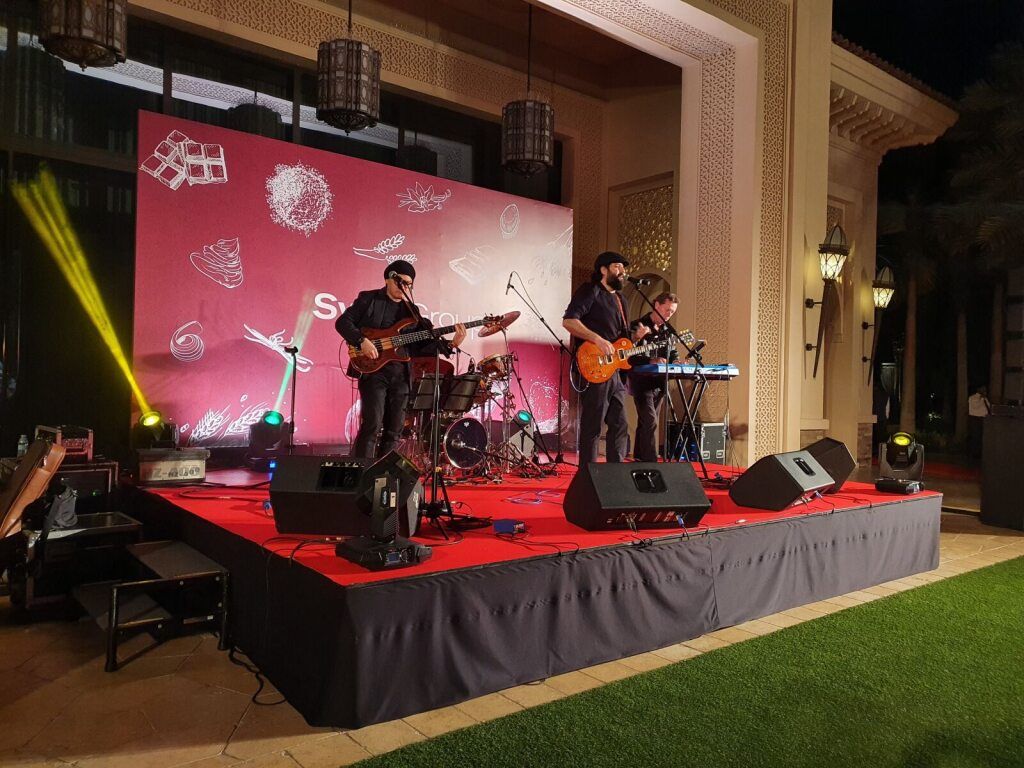
Sound check is not a choice-- it is mandatory:
- You should do a comprehensive test at least 2 hours before the event.
- Play audio on all sources, move around the room, and make changes.
- Back up all the cables, mics, and power supplies.
- Develop an emergency troubleshooting plan (feedback, loss of power, malfunctioning of the mic).
9. Use On-Site AV Technicians
The most excellent equipment may break down without the appropriate personnel:
- Employ professional AV technicians or sound workers.
- They are involved: make real-time adjustments, solve problems, and navigate cues.
- In a high-profile event, ask a team with experience in the type of event.
10. Post-Event Audio Feedback
After your event:
- Get comments concerning audio quality and volume levels.
- Note down (where necessary) the happenings to check on quality.
- Record what was good and can be used in the future.
Quick Checklist: What to Confirm Before Your Event
| Item | Checked |
|---|---|
| Venue acoustics tested | ✅ |
| Appropriate speakers selected | ✅ |
| Mic types chosen (with backup) | ✅ |
| Mixer & EQ configured | ✅ |
| Cabling secured and tested | ✅ |
| On-site AV technician hired | ✅ |
| Full sound check performed. | ✅ |
Final Thoughts
Sound is more than a technical need-- it is an emotional bond. Just a properly designed sound system will guarantee that your event runs smoothly, your message is received well, and that you maintain the interest of your audience throughout.
Purrple Orryx provides professional AV installation, complete event production, and technicians if you want to host an event in Dubai or the UAE.
FAQs
Q1: What is the most frequent error when choosing event sound equipment?
A: Calculating the venue acoustics and the size of the audience incorrectly. Some individuals usually get too miniaturized and have minimal coverage or sound quality.
Q2: Is a business event where I require subwoofers?
A: Not always. In the case of a speech-based event, there is no need to have them. Subwoofers give power and impact in the case of music or dramatic scenes.
Q3: Is it possible to use wireless mics during outdoor occasions?
A: Yes, but make sure you are working in the correct band of frequencies and check for interference. Always have spare batteries.
Q4: Should sound equipment be rented or purchased when it is a one-time affair?
A: Renting is nearly always cheaper, and you get up-to-date, maintained equipment - and support staff.
Q5: What are the vehicle's sound issues?
A: Test it early. Inbuilt systems are usually simple or inefficiently maintained. You can come with your own setup in an emergency.