
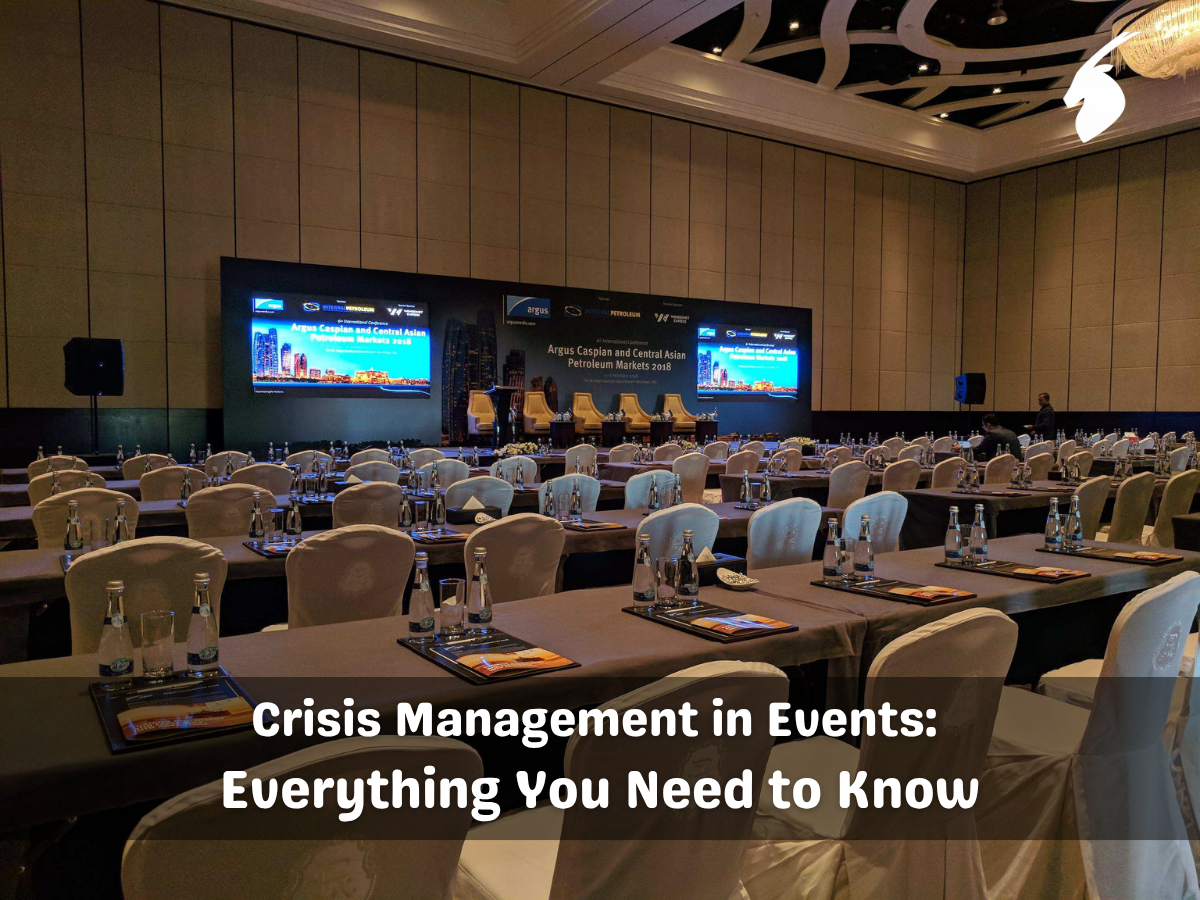
Crisis Management in Events: Everything You Need to Know
By Humais Waqar, Marketing Head, Purrple Orryx Events · 24 Aug 2026 · 10 min read
Planning a corporate event? We plan and deliver corporate events end to end.
“Crisis management in events is about preparing for unexpected situations and responding calmly when problems arise. From medical emergencies and severe weather to technical failures and security concerns, a clear plan can protect people and reduce disruption. Effective communication, defined responsibilities, and backup solutions help teams stay prepared and recover quickly. Ultimately, strong crisis management gives every event a better chance of staying safe, organized, and successful.”
Crisis management in events is the process of preparing for, responding to, and recovering from unexpected situations that can affect attendees, staff, vendors, schedules, safety, or an event's overall success. From sudden weather changes and technical failures to medical emergencies and security concerns, even carefully planned events can face situations that require immediate action.
A successful event is not defined only by what happens when everything goes according to plan. It is also defined by how calmly and effectively the team responds when something goes wrong. Strong preparation, clear responsibilities, effective communication, and practical backup plans can help reduce confusion and protect the event experience. This guide explains crisis management in events, the most common event risks, how to create an emergency response plan, effective crisis communication strategies, common mistakes, and the steps teams can take before, during, and after an incident.
Table of Contents
- What Is Crisis Management in Events?
- Why Is Crisis Management Important for Events?
- Common Types of Event Crises
- How to Create an Event Crisis Management Plan
- Event Crisis Management Process
- Key Components of an Event Emergency Response Plan
- Crisis Communication During Events
- How to Manage Different Event Emergencies
- Common Crisis Management Mistakes
- Role of Technology in Event Crisis Management
- Post-Event Crisis Review
- Top 10 LSI Keywords
- Final Thought
- Frequently Asked Questions
What Is Crisis Management in Events?
Crisis management in events refers to the structured approach used to prepare for, handle, and recover from unexpected situations during an event. It focuses on protecting people, reducing disruption, maintaining communication, and helping the event return to normal operations as quickly as possible. An event crisis can happen before guests arrive, during the event, or even after the program ends. A supplier may fail to deliver essential equipment, severe weather may threaten an outdoor gathering, or a guest may experience a medical emergency.
The purpose of crisis management is not to predict every possible problem. Instead, it is about identifying realistic risks and creating clear procedures that allow the team to respond without unnecessary confusion.

Why Event Crisis Management Requires Preparation
Events involve many moving parts. Venues, suppliers, speakers, performers, technical teams, security personnel, catering staff, transportation providers, and attendees may all depend on one another.
When one part of the operation fails, it can quickly affect others. A power outage can stop presentations, disrupt lighting, affect catering equipment, and create safety concerns at the same time. This is why event risk management should begin during the planning stage. Teams can identify potential problems, assign responsibilities, and establish alternative solutions before event day arrives.
Why Is Crisis Management Important for Events?
The importance of crisis management becomes clear when an unexpected situation occurs in front of a live audience. Unlike many workplace disruptions, event problems can become visible immediately.
Effective crisis planning can help protect:
- Attendee safety: Clear procedures can help staff respond quickly to emergencies.
- Staff confidence: Employees perform better when they understand their responsibilities.
- Event continuity: Backup arrangements can reduce delays or cancellations.
- Reputation: Calm and transparent communication can help maintain public confidence.
- Financial resources: Contingency planning can reduce losses caused by major disruptions.
- Stakeholder relationships: Sponsors, partners, speakers, and vendors expect organized responses.
- Guest experience: Even when something goes wrong, professional handling can reduce its impact.
Good preparation also gives decision-makers a clear framework. Instead of asking who should respond or what should happen next, the team can follow previously established procedures.

Common Types of Event Crises
Every event has its own risk profile. A large outdoor festival may face different challenges from a corporate conference or private celebration. However, several crisis categories appear frequently across different event formats.
1. Medical Emergencies
A guest, staff member, speaker, or performer may become injured or suddenly ill. Medical incidents require immediate attention and coordination with trained personnel or emergency services. The team should know where first-aid resources are located and who is responsible for contacting emergency responders.
2. Severe Weather
Rain, storms, extreme heat, strong winds, flooding, or other weather conditions can create serious challenges, particularly for outdoor events. A weather contingency plan should identify alternative locations, evacuation procedures, communication methods, and conditions that would require the event to be postponed or moved.
3. Technical Failures
Sound systems, projectors, lighting, internet connections, power supplies, registration systems, and livestreaming equipment can fail without warning. Technical teams should prepare backup equipment and establish procedures for switching to alternative systems quickly.
4. Security Incidents
Unauthorized access, suspicious behavior, crowd disturbances, lost children, or other security concerns can require immediate intervention. Security procedures should clearly explain how staff report incidents and how guests can be moved away from potentially dangerous areas.
5. Vendor or Supplier Failure
A delayed delivery, missing equipment, catering issue, or transportation problem can disrupt the event schedule. Maintaining backup contacts and alternative suppliers can help reduce the impact of these failures.
6. Fire or Evacuation
Fire alarms, smoke, structural concerns, or other hazards may require guests to leave the venue. An emergency evacuation plan should include clearly identified exits, assembly points, staff responsibilities, and communication procedures.
7. Cybersecurity and Data Incidents
Events increasingly rely on digital registration, payment systems, mobile applications, Wi-Fi networks, and online platforms. A cyber incident can affect both operations and attendee information. Teams should understand who handles the technical response and how affected stakeholders will be informed.
8. Public Relations Crisis
A serious incident can quickly spread through social media and online platforms. Incorrect information, poor communication, or an insensitive response can make an existing problem worse. A prepared communication process helps ensure that information is accurate, consistent, and delivered at the right time.
How to Create an Event Crisis Management Plan
An effective crisis management plan should be practical enough to use under pressure. It should not be a complicated document that nobody remembers during an emergency.
1. Identify Potential Risks
Start by listing realistic threats based on the venue, location, event type, audience, season, suppliers, technology, and schedule.
For example, an outdoor event may prioritize weather risks, while a large public gathering may place greater emphasis on crowd management and security.
2. Assess Risk Levels
Not every risk requires the same level of preparation. Evaluate each risk according to its likelihood and potential impact. High-impact risks should receive greater attention, even when they are less likely to happen.
3. Assign Clear Responsibilities
Every major crisis scenario should have a designated person responsible for coordinating the response.
Roles may include:
- Crisis coordinator
- Safety lead
- Medical contact
- Security lead
- Technical coordinator
- Venue representative
- Communications lead
- Vendor coordinator
Backup personnel should also be identified in case the primary contact is unavailable.
4. Prepare Backup Solutions
A contingency plan should provide realistic alternatives. This could include backup equipment, alternative venues, replacement vendors, additional transportation, temporary communication channels, or schedule adjustments.
5. Establish Communication Procedures
Decide how information will move between staff, vendors, venue management, emergency services, speakers, and attendees. Communication channels should be tested before the event begins.
6. Train and Rehearse
A plan becomes more useful when people understand how to apply it. Teams should review major scenarios and conduct practical drills where appropriate. Rehearsals can reveal gaps that may not be obvious when the plan exists only on paper.
Event Crisis Management Process
A structured response generally follows several stages.
1. Risk Assessment
Identify hazards and determine which situations could create the greatest impact.
2. Prevention
Take reasonable steps to reduce the chance of those incidents occurring.
3. Preparation
Develop procedures, assign roles, prepare communication channels, and arrange backup resources.
4. Detection
Recognize the problem quickly and verify the information before making major decisions.
5. Response
Activate the appropriate procedure and focus first on safety and immediate control.
6. Communication
Provide clear updates to the people who need to know. Avoid speculation and conflicting information.
7. Recovery
Restore normal operations where possible and address remaining safety, operational, financial, or communication concerns.
8. Evaluation
Review the incident after the event and update the plan based on what the team learned.
This process creates a continuous cycle of preparation and improvement rather than treating crisis management as a one-time task.

Key Components of an Event Emergency Response Plan
A practical event emergency response plan should contain information that staff can quickly access during a stressful situation.
Important components include:
- Emergency contact information
- Venue maps and emergency exits
- Evacuation procedures
- First-aid and medical arrangements
- Security protocols
- Weather monitoring procedures
- Backup venue information
- Vendor and supplier contacts
- Communication templates
- Staff roles and responsibilities
- Equipment backup procedures
- Attendee notification methods
- Incident documentation procedures
- Recovery and post-event review steps
The plan should be shared with the people who have responsibilities during an emergency. Sensitive information should also be handled appropriately.
Crisis Communication During Events
Communication can determine whether a manageable incident becomes a much larger problem. During a crisis, messages should be clear, timely, accurate, and appropriate for the audience. Staff need operational instructions, while attendees may need simple guidance about what they should do.
For example, if severe weather affects an outdoor event, guests may need to know whether to remain in place, move to a designated shelter, or leave the venue.
Principles of Effective Crisis Communication
- Communicate confirmed information.
- Avoid unnecessary speculation.
- Give clear instructions.
- Use consistent messages across channels.
- Keep staff informed as the situation develops.
- Provide updates when new information becomes available.
- Avoid making promises that cannot be guaranteed.
- Document important communications.
A calm communication style can reduce anxiety and prevent rumors from spreading.
How to Manage Different Event Emergencies
Different situations require different responses. A useful plan should therefore include scenario-specific procedures.
Medical Emergency
Contact trained medical personnel or emergency services, keep unnecessary people away from the affected area, and provide staff with clear instructions about maintaining access for responders.
Severe Weather
Monitor conditions before and during the event. If conditions become unsafe, activate the predetermined weather contingency plan and communicate instructions clearly.
Technical Failure
Identify the failed system, switch to backup equipment where possible, and adjust the program while technical staff work on restoration.
Security Incident
Follow established security procedures, protect attendees from unnecessary exposure to the incident, and coordinate with appropriate authorities when required.
Vendor Failure
Contact the backup supplier or alternative service provider and adjust the schedule if necessary. Strong vendor coordination before the event can reduce response time.
Evacuation
Use designated exits and direct attendees toward predetermined assembly points. Staff should avoid creating additional confusion by giving conflicting instructions.
Common Crisis Management Mistakes
Even well-planned events can experience problems when crisis procedures are poorly implemented.
Treating the Plan as a Document Only
A crisis plan is useful only when the people responsible for using it understand it.
Failing to Assign Decision-Makers
If nobody knows who has authority during an emergency, valuable time can be lost.
Ignoring Communication
Silence can create confusion and encourage rumors. Even when every detail is not available, appropriate updates can help maintain control.
Having No Backup Suppliers
Depending entirely on one vendor for critical services can increase vulnerability.
Forgetting Post-Event Evaluation
Every incident provides information that can improve future planning. Skipping the review means losing that opportunity.
Overreacting Without Verification
Acting quickly is important, but decisions should still be based on reliable information whenever possible.
Role of Technology in Event Crisis Management
Technology can support faster detection, communication, and coordination during an emergency. Event teams may use mass notification systems, digital registration platforms, weather alerts, communication applications, security monitoring tools, backup power systems, and cloud-based documentation.
Artificial intelligence can also support risk monitoring by identifying unusual patterns or helping teams process large amounts of information. However, technology should support human decision-making rather than replace it. A reliable system should also have backup options. If the primary digital platform becomes unavailable, the team should still have a way to communicate and coordinate.
Post-Event Crisis Review
Crisis management does not end when the immediate problem is resolved. A post-event incident review should examine what happened, how the team responded, what worked, and where improvements are needed.
Useful questions include:
- What caused the incident?
- How quickly was it detected?
- Did the response team understand their responsibilities?
- Was communication effective?
- Were backup resources available?
- Did attendees receive clear instructions?
- Were there delays in decision-making?
- What should be changed before the next event?
The findings should be added to future event management planning so that lessons from one event strengthen the next one.

Final Thought
Crisis management in events is not about expecting the worst. It is about being prepared enough to respond when the unexpected happens. A strong plan gives teams clearer responsibilities, faster decision-making, better communication, and practical alternatives when normal operations are disrupted.
From medical emergencies and severe weather to technical failures and security concerns, preparation can make a meaningful difference. When crisis planning becomes a regular part of event management planning, teams can face uncertainty with greater confidence and protect the people, experience, and objectives that matter most.
Frequently Asked Questions
What is crisis management in events?
Crisis management in events is the process of preparing for, responding to, and recovering from unexpected situations that may affect attendee safety, event operations, reputation, or continuity.
Why is crisis management important for events?
It helps teams respond quickly and consistently when unexpected problems occur. Effective preparation can reduce confusion, protect attendees, limit disruption, and support faster recovery.
What should an event crisis management plan include?
An event crisis management plan should include emergency contacts, risk assessments, staff responsibilities, communication procedures, evacuation routes, backup resources, vendor contacts, and recovery procedures.
What are the most common event crises?
Common event crises include medical emergencies, severe weather, technical failures, security incidents, vendor problems, evacuations, cybersecurity incidents, and public relations issues.
What is an event emergency response plan?
An event emergency response plan is a documented procedure that explains what staff should do when an emergency occurs. It normally identifies responsibilities, communication methods, emergency contacts, evacuation procedures, and response actions.
How can event organizers prepare for severe weather?
Organizers can monitor weather conditions, establish safety thresholds, identify alternative locations, prepare evacuation or shelter procedures, and create a weather contingency plan before the event begins.
What is crisis communication during an event?
Crisis communication is the process of providing accurate and timely information to staff, attendees, vendors, stakeholders, and other relevant parties during an incident.
How often should an event crisis plan be reviewed?
The plan should be reviewed before each event and updated whenever the venue, event format, suppliers, audience size, technology, or risk conditions change.
What happens after an event crisis?
After the immediate situation is resolved, the team should conduct a post-event incident review, document what happened, evaluate the response, and make improvements for future events.
Can technology prevent event crises?
Technology cannot prevent every crisis, but it can support early detection, communication, monitoring, coordination, and response. Human judgment and a well-rehearsed plan remain essential.
About the author: Humais Waqar, Marketing Head, Purrple Orryx Events. Humais Waqar leads marketing at Purrple Orryx Events, the Dubai corporate event management company, and writes about planning conferences, gala dinners, launches and team events in the UAE.